5 good reasons to start making kakigori at home
in short
- The texture: Snow-like shavings that dissolve on the tongue. Nothing like crushed ice or a snow cone.
- Low calorie ceiling: Mostly water and syrup. You control what goes on top.
- Full customization: Every bowl is different. Flavors, toppings, and combinations are yours to choose.
- Cultural depth: A thousand-year-old Japanese tradition with regional and seasonal variations.
- Machine required: The experience depends on proper equipment. A blender will not do it justice.
Kakigori shops in Japan do not need to advertise. The blue-and-white banner hanging at the entrance does the work. People stop, almost instinctively, because kakigori signals summer in a way that other desserts simply do not. After spending years working with Japanese shaved ice, I have thought about what makes it worth setting up a machine at home rather than just buying a pre-made dessert. Here are the five reasons that actually hold up.
1. The texture is genuinely different
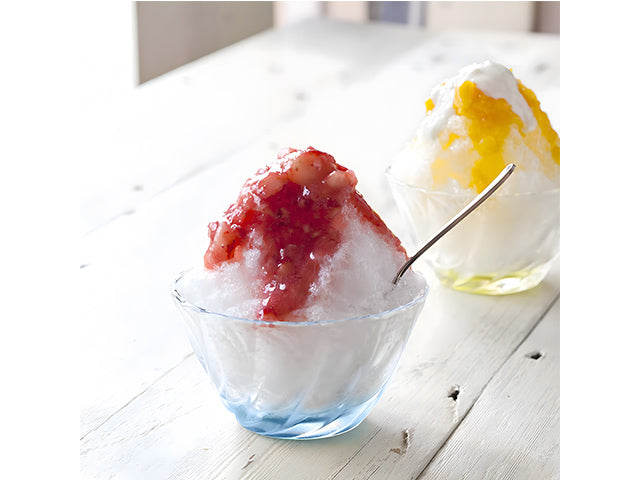
Kakigori made on a proper machine from a solid block of ice produces shavings that behave like fresh snow. They absorb syrup rather than letting it run off. They dissolve on the tongue rather than crunching. This is not a minor difference from a snow cone or crushed ice drink. It is a fundamentally different sensory experience, and it is one you can only get from the right equipment and the right ice preparation.

A blender or hand-crusher produces chips. A kakigori machine produces shavings. The gap between them is the gap between a passable frozen dessert and the real thing. See our home-use machine selection if you are starting out.
2. You control exactly what goes into it
Commercial kakigori uses artificial syrups. That is fine for a festival, less ideal if you are watching what you consume or feeding children regularly. At home, you choose the ice quality, the syrup, and every topping. The calorie count of kakigori made with a light syrup and fresh fruit is significantly lower than most ice cream portions.

3. The customization has no ceiling
Kakigori is one of the few desserts where the combination space is genuinely large. Matcha syrup with condensed milk and shiratama. Yuzu with fresh grapefruit segments. Strawberry with anko and a pour of kuromitsu. Blue hawaii with coconut milk and mango. Each combination produces a different result because the ice itself changes character depending on what it absorbs. Our toppings collection and syrup range are the starting point.
4. It is a legitimate cultural experience
Kakigori has a documented history stretching back to the 11th century Heian court. Its seasonal flavors track Japanese produce: strawberry in spring, melon in early summer, peach in August, sweet potato in autumn. The traditional toppings come from the same confectionery tradition as wagashi. Making kakigori at home is a way into that culture that a packaged product or a restaurant visit does not quite replicate.
5. The setup is simpler than it looks
The barrier most people imagine is higher than the actual one. A home-use kakigori machine, a set of ice molds, a couple of syrups, and a bag of shiratama from a Japanese grocery store is all you need for a first session. The machine does the work. The ice prep takes planning but minimal effort.

Start with our home-use machines, add serving cups, pick two or three syrups, and you are equipped for the first bowl. Everything else you learn by making it.