The different kind of shaved ice in the world
in short
- Hawaiian shave ice: Fluffy, cone-served, with intensely colored syrups. Japanese influence via plantation workers.
- Taiwanese bao bing: Shaved milk ice, denser than kakigori, topped with mango, taro, or red bean.
- Korean bingsu: Fine milk-shaved ice with condensed milk and fruit. Roots in Joseon royal cuisine.
- French granité: Coarser texture, often alcohol-based, served as a palate cleanser between courses.
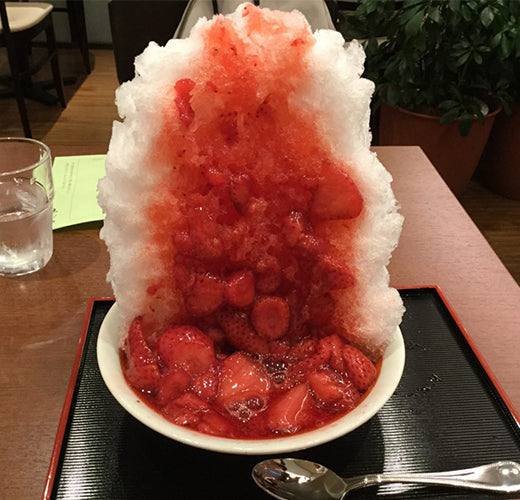
- Japanese kakigori: Block ice only, finest shave, absorbed syrup. The original and still the benchmark.
Shaved ice exists in almost every culture with a hot summer. The base idea is universal. What differs is everything: how fine the shave is, what liquid goes on top, what gets buried inside, and what texture the result is supposed to have. Here is how the major traditions compare.
This page is the tour of the world. If you are trying to settle one specific question, how kakigori actually differs from bingsu and from an American snow cone, we compared those three side by side on ice, blade, texture and machine: kakigori vs bingsu vs snow cone.
Hawaiian shave ice
Hawaiian shave ice uses a rotating block against a blade, producing ice finer than a snow cone but not at kakigori's level of delicacy. The syrups are typically bright and fruit-flavored. The Hawaiian tradition has direct roots in Japanese immigration: workers in Hawaii in the early 20th century brought kakigori culture with them, and shave ice evolved from that contact.

Taiwanese bao bing
Bao bing diverges from kakigori in one key way: the base is often shaved from sweetened milk ice rather than plain water ice. The result is denser and creamier. Toppings sit on top rather than integrating into the shave. Mango bao bing became internationally famous through Taipei's night markets and remains one of Taiwan's signature desserts.

Korean bingsu
Bingsu has the longest aristocratic pedigree outside Japan, served in the Joseon royal court as kkachi boran. Today it is based on finely shaved milk ice, which gives it a creamier baseline than kakigori. Toppings are generous: condensed milk, fresh fruit, sweet red bean, injeolmi rice cake powder, or matcha paste. Korean dessert culture has pushed bingsu toward large portions and elaborate presentations.

French granité
The granité is not a dessert in the same sense. It is a palate cleanser served between courses in a formal meal. The texture is deliberately coarser, the flavor tart or alcoholic (calvados, citrus, champagne), and the portion small. There is no topping, no milk, no layering. Its coarse ice texture reflects its purely functional purpose.

Japanese kakigori: the benchmark
Kakigori sits at the top of this spectrum for one reason: the shave. No other tradition demands block ice, slow-freezing, and blade calibration to the same degree. The goal is ice that absorbs syrup throughout rather than letting it run off, with structure but no crunch. That requires a level of preparation and equipment the other traditions simply do not call for.


Explore our kakigori machines, both electric and manual, alongside our full range of syrups and toppings.