
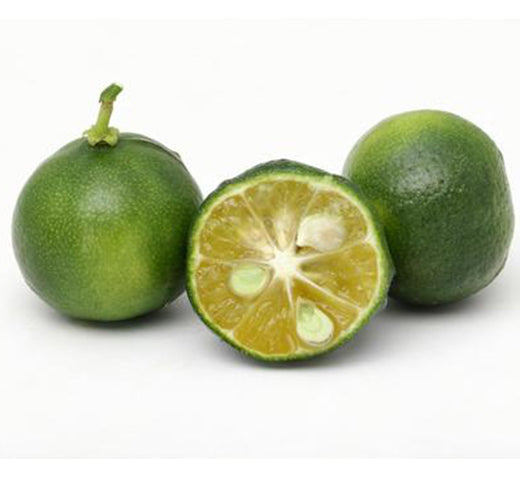
The refreshing power of shikuwasa Juice
in short
- Okinawan origin: Shikuwasa is native to Okinawa and Taiwan. Known locally as the longevity citrus.
- Flavor profile: Tart, bright, and citrusy. Somewhere between lime and yuzu with its own distinct depth.
- High nobiletin content: A flavonoid concentrated in shikuwasa, linked to anti-inflammatory and cardiovascular benefits.
- Kakigori use: Freeze diluted shikuwasa juice into blocks for a naturally flavored, sugar-free shaved ice base.
- Available in our store: We stock shikuwasa juice for direct purchase and shipping.
Okinawa produces a short list of ingredients that are genuinely difficult to find outside Japan: awamori, mozuku seaweed, goya bitter melon, and shikuwasa. Of these, shikuwasa is the one most suited to kakigori. It is tart enough to stand up to the diluting effect of shaved ice, aromatic enough to be interesting, and acidic enough to balance the sweetness of condensed milk or anko without needing added sugar.
What shikuwasa is
Shikuwasa (Citrus depressa) is a small, thin-skinned citrus fruit grown almost exclusively in the northern part of Okinawa's main island and in parts of Taiwan. It ripens from green to yellow-orange, and most serious culinary use happens in the green, unripe stage when the acidity is highest and the aroma most intense.
The name in the Okinawan language means roughly "eat and survive": a reference to its historical use as a condiment and preservative rather than a fresh-eating fruit. Nutritionally, shikuwasa is notable for its nobiletin content, a flavonoid found in citrus peel that research has linked to anti-inflammatory effects, cardiovascular support, and metabolic benefits. Among commercially available citrus juices, shikuwasa has among the highest nobiletin concentrations.

We stock shikuwasa juice in our store if you want to try it without sourcing from Japan directly.
How it tastes
The comparison most commonly made is to yuzu, which is also a Japanese citrus with high acidity and a distinctive aromatic profile. Shikuwasa is sharper and more straightforwardly tart: less floral than yuzu, closer to a concentrated lime with a subtly bitter back note. It does not work well as a stand-alone drink without dilution, which is exactly what makes it interesting for kakigori: the shaved ice provides both dilution and temperature, producing a flavor that is vivid without being aggressive.
Using shikuwasa in kakigori
There are two approaches. The simpler one is to use shikuwasa juice as a syrup: dilute it with simple syrup to your preferred sweetness level and pour directly over shaved ice made from plain water. The more interesting approach is to freeze a diluted shikuwasa and water mixture directly into your ice block mold, then shave that flavored ice. The result is a kakigori where the flavor runs through every layer of ice rather than sitting on top of it.
For the frozen block method: mix shikuwasa juice with water at roughly a 1:4 ratio, freeze slowly for 3-5 days, and temper before shaving as normal. Add a small pour of condensed milk over the top before serving. The combination of tart citrus ice and sweet cream is one of the cleaner kakigori flavor combinations, particularly good in July and August heat.
Other uses beyond kakigori
Shikuwasa juice works as a cooking acid in the same way yuzu or lime juice does: as a marinade for fish, a dressing base for salads, or a finishing squeeze over grilled chicken. Diluted with sparkling water and a little honey it makes a straightforward summer drink. In desserts outside kakigori, it pairs well with white chocolate, coconut, and mango.
Once you have shikuwasa, the next step is the right machine. See our home-use kakigori machines and serving cups, and explore the rest of our syrup range for more flavor directions.