What is Japanese Kakigori ?
in short
- Origin: Kakigōri dates to the 11th century, a court luxury before becoming a street staple in the Meiji era.
- Texture: Snow-like, not crunchy. The ice dissolves on the tongue rather than crunching between the teeth.
- The machine matters: Blade quality and block ice type determine everything about the final texture.
- Syrups and toppings: Strawberry, matcha, lemon, melon, plus condensed milk, red bean paste, and mochi.
- Year-round in Japan: Seasonal flavors follow the produce calendar, not just the summer heat.
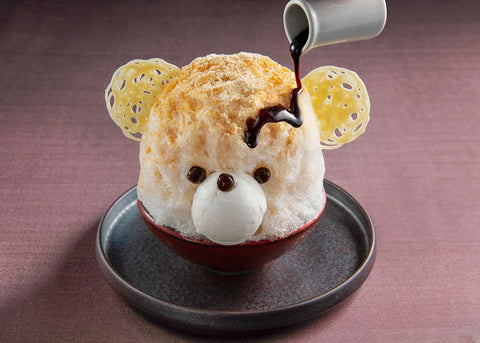
Most people outside Japan encounter kakigori for the first time at a festival stall or a dessert café and assume it is a fancy snow cone. It is not. The difference becomes obvious the moment the ice touches your tongue: it dissolves rather than crunches, soaking up the syrup rather than letting it pool at the bottom of the cup. That texture is the whole point, and it is entirely a product of how the ice is shaved.
What kakigori actually is
Kakigōri (かき氷) is a Japanese dessert made from a block of ice shaved into fine, layered sheets, then dressed with flavored syrup and, in many traditional preparations, a pour of sweetened condensed milk. The name breaks down literally: kaki (掻き) means to scrape or shave, kōri (氷) means ice. Simple concept, demanding execution.
The key variable is blade angle and block ice quality. A well-calibrated machine shaving a solid, slowly-frozen block produces ice that behaves almost like fresh snow: airy, absorbent, and light. A poorly calibrated one produces wet, coarse chips that collapse under the syrup. This is why the machine matters, and why the best kakigori shops in Japan are particular about their equipment.

A thousand years of shaved ice
The first written record of kakigori appears in Makura no Sōshi (The Pillow Book), essays by Sei Shōnagon written around the year 1000. She describes shaved ice served with sweet tree sap in a metal bowl, a privilege exclusive to the Heian imperial court, where ice was preserved through winter in insulated cave repositories called himuro.
It remained an aristocratic luxury for centuries. The shift came during the Meiji era (1868-1912), when industrial ice production drove prices down and street vendors began selling kakigori at festivals and markets. By the Taishō era, it had become a fixture of Japanese summers: a few coins, a stall, and the blue-and-white kakigori banner that still signals the dessert today.
The real difference between kakigori and a snow cone
The comparison is inevitable, and it is worth being precise. A snow cone is made from crushed or coarsely shaved ice that stays granular: the syrup coats the surface and sinks to the bottom as you eat. Kakigori is shaved in continuous overlapping layers from a rotating block, producing a structure closer to compacted powder than to chips. The syrup absorbs throughout rather than pooling.
The practical result: kakigori tastes consistent from first spoonful to last, does not turn into coloured water at the base of the cup, and has a texture that is genuinely hard to achieve without the right machine and the right ice preparation.
Manual vs. electric: how kakigori is made
Traditional kakigori uses a hand-cranked machine: the operator rotates the ice block against a fixed blade, controlling speed and pressure by feel. The technique produces excellent results in experienced hands and remains the standard at artisanal shops that prioritize texture above all else.

Modern electric kakigori machines motorize the same mechanism. Blade geometry is identical. What changes is consistency and output speed. For commercial operations, electric machines eliminate fatigue and hold shaving quality stable across hundreds of portions. For home use, compact electric models make kakigori genuinely accessible.
See our full kakigori machine range to compare both approaches side by side.
Flavors and what goes on top
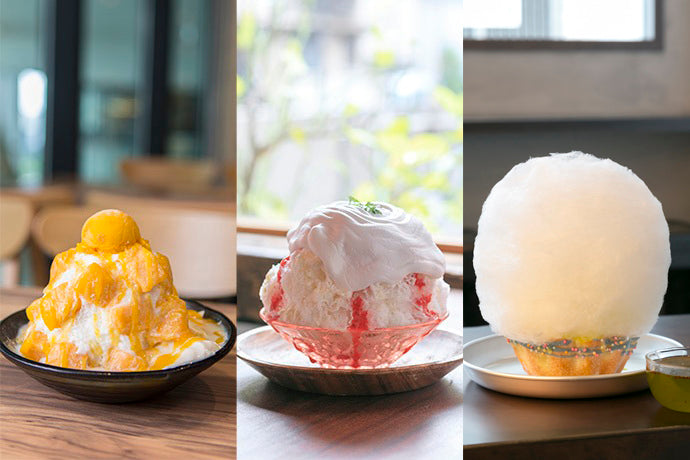
Festival stalls in Japan default to strawberry, lemon, melon, and blue hawaii. Tea-focused dessert shops lean heavily on matcha. Beyond syrups, traditional kakigori typically layers toppings both inside and on top of the shaved ice: sweet azuki red bean paste (anko), shiratama mochi balls, and a final pour of condensed milk or kuromitsu black sugar syrup for depth.

Browse our kakigori syrups and toppings to put your own combination together. If you are just getting started, the accessories and supplies section covers everything else you will need.