Don't make this mistake!
in short
- Perfect ice: Let ice blocks temper until slightly translucent before shaving. It matters more than most people think.
- Water quality: Start with pure mineral water. The difference in shaving clarity is real.
- Real-fruit syrups: Strawberry, lemon, melon. Or make your own: water, sugar, fresh fruit. Fifteen minutes of work.
- Classic combination: Ujikintoki: matcha syrup, sweet red bean paste, condensed milk. The benchmark for a reason.
- Serve immediately: Kakigori does not hold. Make it, hand it over, eat it.
Two mistakes that ruin kakigori before you pour the syrup
The most common kakigori failures have nothing to do with syrup choice or topping combinations. They happen before the bowl is built: wrong ice temperature and wrong water. Fix those two things and everything else becomes easier.
Ice temperature: the one step most people skip
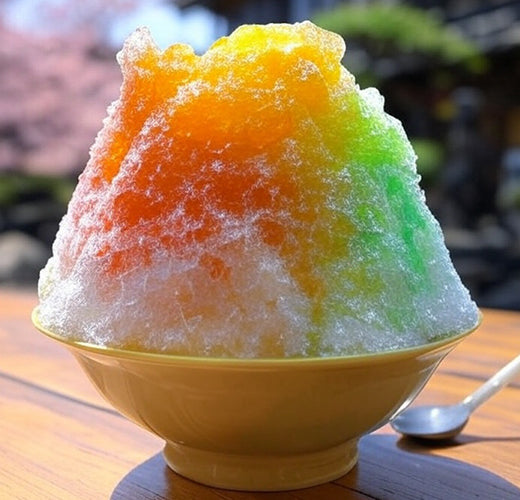
Instead of shaving directly from the freezer, remove the ice block and let it rest until the surface becomes slightly translucent and glossy. This typically takes 10 to 20 minutes at room temperature depending on ambient temperature and block size. The change in the shaving result is significant: ice that is too cold produces dry, powdery flakes that do not absorb syrup and do not hold together in the cup. Tempered ice produces the moist, snow-like shavings that define proper kakigori. It also extends blade life, which matters if you are shaving volume.
Water and syrup quality
Freeze with pure mineral water. The difference in the shaved result: clarity, density, shaving behavior, is noticeable compared to straight tap water. When it comes to syrups, the gap between real-fruit and synthetic is equally clear. Classic flavors like strawberry, lemon, and melon are easy to make from scratch: equal parts water and sugar brought to a simmer, fruit added off the heat, cooled and strained. The result keeps refrigerated for two weeks and tastes entirely different from the concentrate version.

Toppings and the Ujikintoki standard
The toppings question is secondary to the ice and syrup, but worth getting right. Condensed milk and red bean paste are the traditional combination, and they work because the earthiness of the anko and the richness of the milk both contrast cleanly with cold ice. Mochi adds chew. Matcha ice cream on top of a matcha kakigori is excessive: one expression of the flavor is enough.
The most reliable starting kakigori is Ujikintoki: matcha syrup poured over shaved ice, sweet red bean paste on top, a pour of condensed milk to finish. It is the benchmark because it is balanced. Everything else you make becomes a variation on or departure from that reference point.

Serve it the moment it is done
This is not optional. Kakigori does not hold. The texture begins degrading within two to three minutes of the final pour. Make it, hand it to whoever is eating it, and let them start immediately. That constraint is also part of what makes making kakigori at home enjoyable: it has to be done in the moment, which means it is always a live event rather than a plated dessert.